 By Sherman Hu · Updated November 19, 2026 · 14 min read
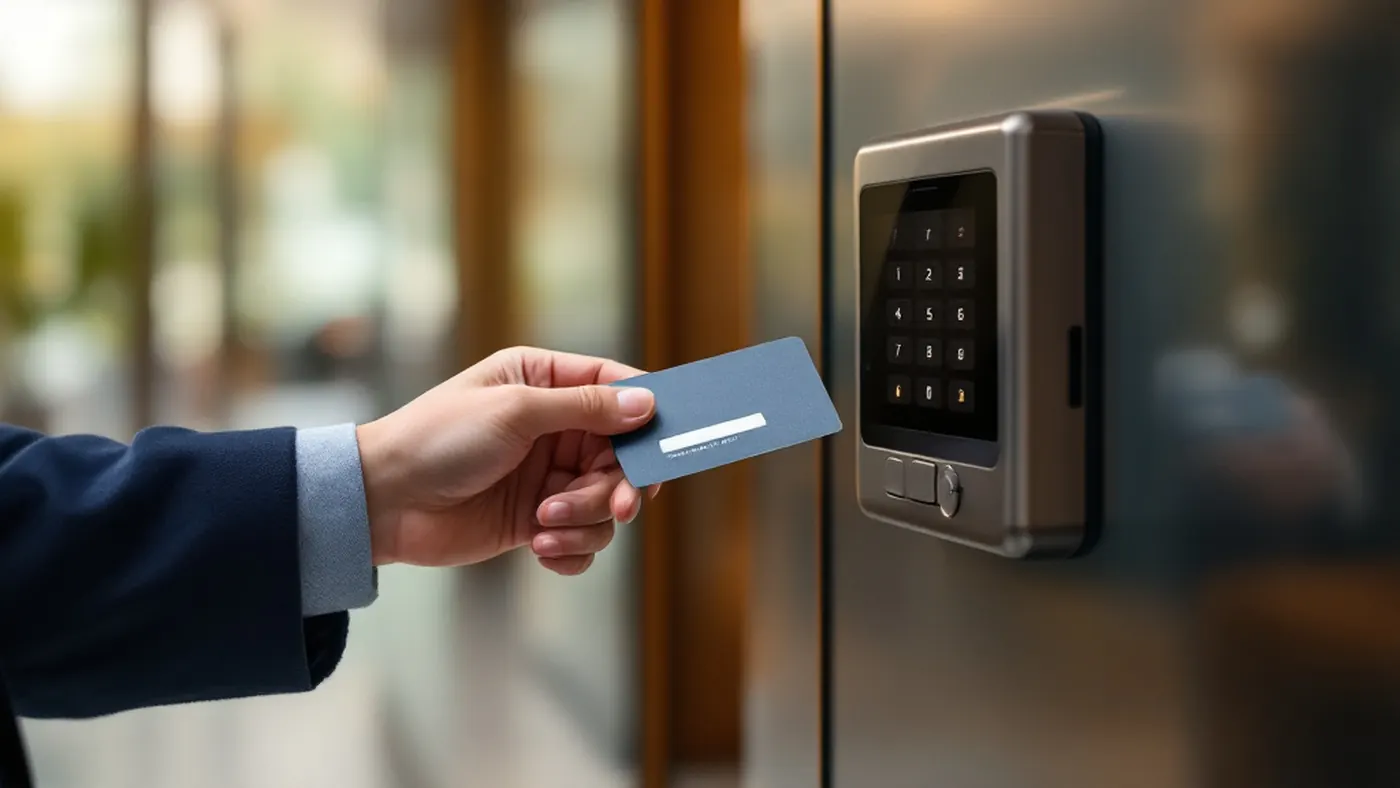
In commercial access control, the company that wins search is the one that speaks to the person responsible for the building: the office manager tired of rekeying after every resignation, the property manager with tenants on four floors, the clinic or school administrator who has to know who came in and when. Give that buyer clear pages for card readers, keypads and cloud access, a few honest reviews from facility contacts and plain proof of licensing, and you stand out in a niche where the map leaders we sampled barely collect reviews at all.
How Buildings Find An Access Control Company
This is a planned B2B purchase with a trigger. A tenant moves in, an employee leaves with a key, a break-in prompts a security review, a lease requires controlled entry, or an old keypad system reaches the end of its life. The person who searches is rarely the owner of the building. It is the office manager, the facilities lead, the property manager or the IT person who got handed the project. They search, ask their landlord or IT provider, and request two or three quotes.
The search data shows who you are dealing with. “Access control systems” gets about 6,600 US searches a month at $40.49 a click. The highest values sit on cloud and building terms: “cloud-based access control systems” (2,400 a month, $101.62 a click), “building access control systems” (320, $96.86) and “card access control systems” (140, $147.55). Advertisers pay those prices because a multi-door project with a monthly software plan is worth thousands of dollars. The 12-month trend runs between 4,400 and 8,100 searches a month, with no strong season.
That last pair of numbers is the opening. Residential lockout work is a crowded map fight with hundreds of reviews per leader. Commercial access control in the same three cities is close to empty. A locksmith who does both kinds of work wins more by building a separate commercial presence than by competing for “locksmith near me”.
| Searcher | Typical trigger | What wins the site walk |
|---|---|---|
| Office manager | Lost keys, staff turnover, a new suite | Plain pricing ranges, a card or phone credential demo, a fast quote form |
| Property manager | Multi-tenant building, lease requirement | Multi-door and multi-site experience, tenant credential management, service plans |
| Clinic or practice administrator | Medication rooms, records rooms, after-hours entry | Audit logs by door and time, scheduled unlocks, a local technician |
| School or district facilities staff | Lockdown planning, visitor control | Door-by-door plans, experience with public bids, references |
| IT manager | Moving door access to the cloud | Platform names you install, integration with user directories, support terms |
Google Business Profile Setup For Access Control
Google’s help page tells owners to select a primary category that best describes the business, to prefer a specific category over a general one, and not to add a category for every service. Our sample shows what the current map leaders chose: 7 of the 9 top results for “access control systems” in Columbus, Tulsa and Spokane used “Security system supplier”, one used “Security system installation service” and one used “Utility contractor”. None used “Locksmith”. If most of your revenue is card readers, keypads and cloud systems, choose the security category that matches; if most of it is locks, keys and door hardware, keep “Locksmith” as primary and add the security category as a secondary one.
Most installers are service-area businesses: you go to the building. Google says a service-area business hides its address, and that a service area stays within about 2 hours of driving time. A showroom or counter that customers visit during posted hours is a storefront. Google does not accept a virtual office, and a service-area business can list an office only if it is staffed during business hours.
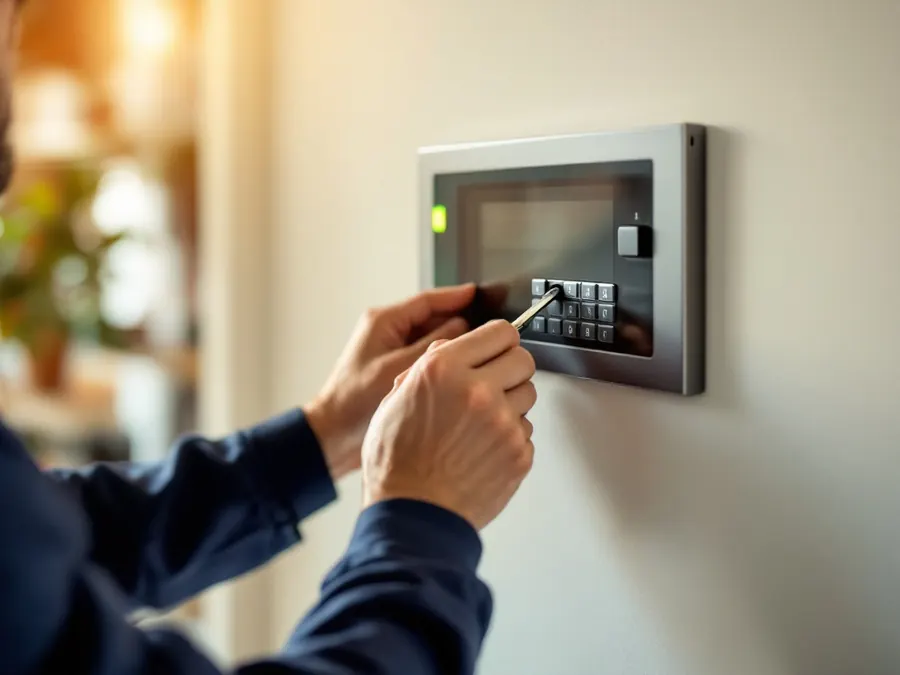
Services
List each thing a buyer asks for: card reader installation, keypad entry, cloud access control, mobile credentials, electric strikes and maglocks, door hardware, rekeying and master key systems, service plans.
Photos
Show finished installs at office doors, lobby readers, gate keypads, a tidy wiring closet and a technician at work. Leave any client logo or address out unless you have written permission.
Name
Use your real business name. Google says unnecessary information in the name is not permitted, so “Access Control” only goes in if it is part of the registered name.
Hours And Posts
Post your office hours and state emergency service in the description only if you answer the phone after hours. Use posts for finished projects and seasonal reminders such as year-end credential audits.
Reviews That Win The Map
The top 3 map results for “access control systems” in our 3-city sample had a median of 4 Google reviews, and 3 of the 9 had none. That is a sample, not a national figure, but it tells you how little it takes. Enter your own count in the Win The Map calculator at the top of this page. In those cities, ten honest reviews from facility contacts put a company ahead of most of the sampled leaders.
Ask the person who lived with the project. That is the office manager who no longer collects keys, the property manager who issues tenant cards from a laptop, or the administrator who pulled an audit log after an incident. Send the request when the system is commissioned and the training is done, from the project lead, with a short note and your Google review link. Google’s help page says customers can leave a review by visiting a Google link or scanning a QR code.
No incentives and no screening. Google’s policy lists incentives such as payment, discounts and free goods or services for reviews as prohibited, and it bans selectively asking only happy customers. A free extra reader or a month of cloud service in exchange for a review breaks the rule. Staff and subcontractors do not review the company: Google names current or former employment as a conflict of interest.
Reply to every review without security details. Do not name the building, the door count, the system brand or the client’s schedule in a public reply: a facility manager who reads that you disclosed another client’s setup will not hire you. Google’s reply guidance says never to share a reviewer’s private information.
Website Pages That Rank And Convert
A commercial access control site sells a project with a site walk at the start and a service plan at the end. Each page answers one buyer question. Sherman Hu builds this kind of plan into his search engine optimization work, and the structure below is where he starts.
| Page | The question it answers | Must include |
|---|---|---|
| Commercial access control | What do you install? | Card readers, keypads, mobile credentials, door hardware, a short process from site walk to training |
| Cloud access control | Can I manage doors from a browser or phone? | Platforms you install, how credentials are issued and revoked, monthly per-door fees explained |
| Pricing guide | What does this cost? | Per-door ranges, what changes the price (wiring, door type, hardware), recurring fees |
| Industry pages | Have you done buildings like mine? | Offices, multi-tenant buildings, clinics, schools, warehouses, with real project notes |
| Service and monitoring plans | Who keeps it running? | What is covered, response times, software updates, credential changes, plan terms |
| Licenses and certifications | Are you qualified here? | State license numbers with links to the official lookup, manufacturer certifications held, insurance |
| City or area pages | Do you cover my building? | Real projects in that area, response time, the office that serves it |
The pricing page earns its place because buyers arrive with numbers from somewhere. One installer’s published cost guide puts card and fob systems at $1,500 to $3,500 per door installed, keypad systems at $500 to $2,500, and standard cloud management at $3.50 to $15 per door per month. Your prices differ, so publish your own ranges and explain what moves them. A facility manager who sees a range books a site walk; one who sees “call for pricing” opens the next tab.

Industry pages work when they carry detail a generic competitor lacks: a clinic page that explains door schedules and audit logs for medication rooms, a multi-tenant page that shows how a property manager adds and removes tenant cards, a school page that covers lockdown from a single screen. Plan city pages with the service area page planner, and only build one for an area where you have finished projects.
Schema. Schema.org defines Locksmith as a type under LocalBusiness and HomeAndConstructionBusiness, and it is not deprecated. It fits a locksmith shop that also installs access control. A pure integrator that does no lock work fits the plain LocalBusiness type with a services list. The local business schema generator writes the code.
Niche Directories And Citations
Facility managers check credentials, and the associations and licensing records that prove them double as citations that confirm your name, address and phone. Start with licensing and the trade associations, then the places where property managers spend time.
ALOA
ALOA Security Professionals Association runs a consumer page titled “Info & Find A Qualified Locksmith”. Its certifications include CRL, CPL and CML for general and commercial locksmithing, and CEL and CMEL for electronic locksmithing.
Electronic Security Association
ESA describes itself as the largest US trade association for the electronic security and life safety industry. It offers training, certifications and a member search.
State License Lookups
Link your license record from your licenses page. In Texas and California, licensing for locksmiths and access control sits with state agencies; see the rules section below.
Property Management Groups
Local building owner and property manager associations, chambers of commerce and a LinkedIn company page reach the people who sign access control contracts.
Manufacturer certifications work as trust signals when stated plainly. List each manufacturer program your technicians currently hold, with the exact program name the manufacturer uses, on your licenses page and on the matching product page. Avoid wording that suggests a manufacturer endorses your company unless the manufacturer says so in writing. Use the NAP consistency checker to compare listings once they are live.
Showing Up In AI Answers
Facility managers now ask AI assistants for a shortlist: “Who installs cloud access control for a three-story office in Tulsa?”, “Commercial locksmith in Columbus that does card readers and master keys” or “Access control company for a medical clinic in Spokane”. An assistant can only name a company whose facts it can find and trust.
Google says there are no additional requirements to appear in AI Overviews or AI Mode, and no special schema.org structured data to add: a page has to be indexed and eligible to show in Search with a snippet. OpenAI says OAI-SearchBot is the crawler used to surface websites in ChatGPT search, and recommends allowing it in robots.txt. Check that yours does not block it.
- Write the facts once. Company name, service area, phone, license numbers, platforms you install, building types you serve, service plan terms, worded the same on your site, Business Profile and directories.
- Answer buyer questions on the page. A cloud access control page that names the platforms, the per-door monthly cost range and how credentials are revoked gives an assistant something specific to quote.
- Earn third-party mentions. Association listings, your license record, manufacturer installer locators and local property management groups confirm you exist and are qualified.
- Test it. Ask ChatGPT, Gemini, Copilot and Perplexity for an access control installer in your city each month, and note whether you appear and whether the facts are right.
Ads Worth Testing
Google’s US Local Services Ads page lists “Locksmith” and “Home security” as eligible categories, both under home services. They reach homeowners more than facility managers, so treat them as a residential channel. Locksmith advertising also carries an extra step: Google’s Advanced Verification policy lists locksmith services in the United States and Canada, and the check covers business registration, professional licenses where they apply, evidence of misleading practices and a recorded video interview.
For commercial buyers, Google Ads and Microsoft Ads search campaigns are the more direct test. The costs are high, so aim at the searches that name a building or a technology, and send each click to the matching page.
| Search | Searches a month | Cost per click | Landing page |
|---|---|---|---|
| cloud-based access control systems | 2,400 | $101.62 | Cloud access control |
| building access control systems | 320 | $96.86 | Multi-tenant building page |
| commercial access control systems | 260 | $58.26 | Commercial access control |
| door access control systems for business | 210 | $55.39 | Pricing guide |
| access control systems near me | 880 | $49.66 | City page |
| network access control systems | 170 | – | Exclude: IT network security |
| what is access control systems | 210 | $12.82 | Exclude: people learning the term |
Add manufacturer names as negative keywords unless you sell that brand and have a page for it, since many of those searches look for the manufacturer’s own support. Run ads during the hours someone answers the phone. Lead platforms and bid sites are a different trade: you pay for a spot next to competitors, and the facility manager compares you there, so your own site and reviews still decide the call.
Turning Visits Into Site Walks
The conversion in this niche is a site walk request. Make it short for a busy manager: a “Book a site walk” button and click-to-call at the top of every page, plus a form that asks only what you need to prepare.
Reply the same business day and book the walk within the week. After the walk, send a written proposal with door-by-door scope, the one-time price and the monthly plan, and follow up on a set date. After installation, the project lead sends the training notes, the service plan summary and the review link together. Track which clients renew service plans and which buildings add doors: recurring revenue is where this business compounds.
Rules And Risks In Access Control Marketing
Licensing, life safety and accessibility rules shape what you install and what you can claim. This section informs; it is not legal advice, and each state and city sets its own rules.
- Texas licensing. Texas Occupations Code section 1702.1025 bars anyone without an electronic access control device company license from acting as, or offering the services of, such a company, and section 1702.1055 says installing or maintaining an electronic access control device makes a company one. The same license does not cover alarm systems without a separate alarm license. Section 1702.1056 treats a company as a locksmith company if it installs or services mechanical security devices, advertises with the word “locksmith” or uses it in its name.
- California licensing. The Bureau of Security and Investigative Services licenses locksmith companies, defined as businesses that install, repair, open or modify locks or originate keys, and registers locksmith employees after DOJ and FBI background checks. The Contractors State License Board’s C-7 Low Voltage Systems classification covers energy-limited systems up to 91 volts and excludes low voltage fire alarm systems; ask the board which classification fits your work.
- Exit doors. OSHA’s exit route rule, 29 CFR 1910.36(d)(1), states that employees must be able to open an exit route door from the inside at all times without keys, tools or special knowledge. Local fire codes add their own rules for locking and releasing egress doors, so check with your fire marshal or building department.
- Accessible hardware. The 2010 ADA Standards require door hardware to be operable with one hand without tight grasping, pinching or twisting of the wrist (309.4, applied to doors by 404.2.7), with operable parts between 34 and 48 inches above the floor.
- Advertising claims. List only licenses and certifications your company and technicians currently hold, with the exact names the issuing body uses. Google’s locksmith verification checks licenses against public records.
Your 90-Day Plan
Work through these in order. Your ticks save on this device.
Searches Your Customers Use
Real US Google searches for commercial access control, with monthly volume and what advertisers pay per click. Build a page or a section for each group of searches.
| Search | Searches a month | Cost per click |
|---|---|---|
| access control systems | 6,600 | $40.49 |
| cloud-based access control systems | 2,400 | $101.62 |
| cloud access control systems | 1,600 | $50.82 |
| access control systems near me | 880 | $49.66 |
| door access control systems | 880 | $39.41 |
| access control systems installation | 480 | $5.45 |
| building access control systems | 320 | $96.86 |
| commercial access control systems | 260 | $58.26 |
| door access control systems for business | 210 | $55.39 |
| card access control systems | 140 | $147.55 |
Free Tools For This Plan
 Free GeneratorGoogle Review Link And QR Code GeneratorMake the link that opens your Google review box, plus a QR code and a printable counter card.
 Free GeneratorLocal Business Schema GeneratorFill in a form, get valid LocalBusiness JSON-LD to paste into your site.
 Free PlannerService Area Page PlannerList your services and towns, get a page plan that avoids thin copy-and-paste pages.
 Free CheckerNAP Consistency CheckerPaste your name, address and phone from each listing and see every mismatch at a glance.
Questions Commercial Access Control Owners Ask
Which Google category fits an access control company?
Google tells owners to pick the most specific primary category that describes the business and not to add one for every service. In our 3-city sample, 7 of the 9 top map results for “access control systems” used “Security system supplier” and one used “Security system installation service”. A shop whose main trade is locks and keys fits “Locksmith”. Pick the one that matches most of your revenue.
Do I need a license to install card readers?
It depends on the state. Texas requires an electronic access control device company license for anyone who installs or maintains those devices, and that license alone does not cover alarm systems. California licenses locksmith companies through BSIS, and its contractors board runs a separate low voltage classification. Check your own state’s licensing board before you advertise the service.
Can I run Google Local Services Ads for commercial access control?
Google’s US page lists “Locksmith” and “Home security” as eligible categories, but both sit under home services, so they reach homeowners more than facility managers. Locksmith advertisers also go through Google’s Advanced Verification, which checks licenses and business registration and includes a recorded video interview. For commercial buyers, regular search ads on the cloud and building terms are the more direct test.
Do manufacturer certifications help my rankings?
Their main job is to reassure the buyer: a facility manager comparing installers looks for proof that your technicians are trained on the platform they want. State each certification factually, with the exact name the manufacturer uses, on your about page and on the matching product page. Keep logos to programs you currently hold.
Does a service contract belong on my website?
Yes. A page that explains your monitoring, maintenance and cloud management plans answers the question a property manager asks after the install: who keeps this running? List what the plan covers, response times, and how software updates and credential changes are handled. Cloud platforms charge per door each month, so a clear service page also explains the recurring cost upfront.
How do I keep IT searches out of my ads?
Add negative keywords. “Network access control” describes IT security for computer networks, not doors. Searches with a manufacturer’s name often come from people looking for that company’s own support pages, and “what is” searches come from people learning the term. Our DataForSEO data includes all three types among the 60 related searches.
Sources And How We Measured
Search numbers come from DataForSEO (Google Ads data, United States) on November 19, 2026: monthly searches and cost per click for “access control systems” and related searches, plus a 12-month trend. The map figures come from the top 3 Google Maps results for the main search in Columbus OH, Tulsa OK and Spokane WA: a sample, not a national average. “Agencies searching for this niche” counts searches such as “commercial access control marketing” and “SEO for commercial locksmith and access control companies” per 1,000 customer searches (0 here).
On November 19, 2026, we sorted the 60 related US searches DataForSEO returned for “access control systems”. Six name a manufacturer or brand, two ask what access control is, one is about network (IT) access control, and one asks for a top 10 list of companies. The keyword table above lists 10 buyer searches. The State Of Search panel shows the cost per click of “access control systems near me” ($49.66); the plain term costs $40.49. The map categories and review counts come from the same 3-city sample, and the “locksmith” median of 290 comes from a separate map pull for that search in the same three cities. The calculator’s $8,000 example project is an illustration, not a market rate: four card-reader doors at $2,000 each, inside the $1,500 to $3,500 per-door range one installer’s cost guide gives for card and fob systems. Your pricing varies with doors, hardware and wiring.
- Schema.org: Locksmith (Nov 2026). schema.org/Locksmith
- Google: Local Services Ads (US eligible services) (Nov 2026). business.google.com/us/ad-solutions/local-service-ads/
- Google Advertising Policies Help: Advanced Verification (locksmith services) (Nov 2026). support.google.com/adspolicy/answer/7167922?hl=en
- Texas Occupations Code 1702.1025: Electronic Access Control Device Company License Required (Nov 2026). texas.public.law/statutes/tex._occ._code_section_1702.1025
- Texas Occupations Code 1702.1055: Electronic Access Control Device Company (Nov 2026). texas.public.law/statutes/tex._occ._code_section_1702.1055
- Texas Occupations Code 1702.1056: Locksmith Company (Nov 2026). texas.public.law/statutes/tex._occ._code_section_1702.1056
- California Bureau of Security and Investigative Services: Locksmith fact sheet (Nov 2026). www.bsis.ca.gov/forms_pubs/locksmith_fact.shtml
- California Contractors State License Board: C-7 Low Voltage Systems Contractor (Nov 2026). www.cslb.ca.gov/About_us/Library/Licensing_Classifications/Licensing_Classificat...
- OSHA: 29 CFR 1910.36, Design and construction requirements for exit routes (Nov 2026). www.osha.gov/laws-regs/regulations/standardnumber/1910/1910.36
- U.S. Access Board: 2010 ADA Standards (309.4 Operation; 404.2.7 Door and Gate Hardware) (Nov 2026). www.access-board.gov/ada/
- ALOA Security Professionals Association: Certifications (Nov 2026). www.aloa.org/certifications
- ALOA: For Consumers (find a qualified locksmith) (Nov 2026). www.aloa.org/consumers
- Electronic Security Association: home page (training, certifications, member search) (Nov 2026). esaweb.org/
- Safe and Sound Security: Access Control Systems Cost guide (installer estimates) (Nov 2026). getsafeandsound.com/blog/access-control-systems-cost/
- Google Business Profile Help: Guidelines for representing your business on Google (Nov 2026). support.google.com/business/answer/3038177
- Google Business Profile Help: Choose a business category (Nov 2026). support.google.com/business/answer/7249669
- Google Business Profile Help: Tips to get more reviews (Nov 2026). support.google.com/business/answer/3474122
- Google Maps Help: Maps user contributed content policy (Nov 2026). support.google.com/contributionpolicy/answer/7400114
- Google Search Central: AI features and your website (Nov 2026). developers.google.com/search/docs/appearance/ai-features
- OpenAI: Overview of OpenAI crawlers (OAI-SearchBot) (Nov 2026). developers.openai.com/api/docs/bots